Curated visual guide

The Mandala of Mandalas Visual Guide

This curated guide outlines the key meta-architectural blueprints and containment figures defined in the book. As a pre-release monograph, these sections detail the vertical coordination topology of the Mandala Intelligence ecosystem.

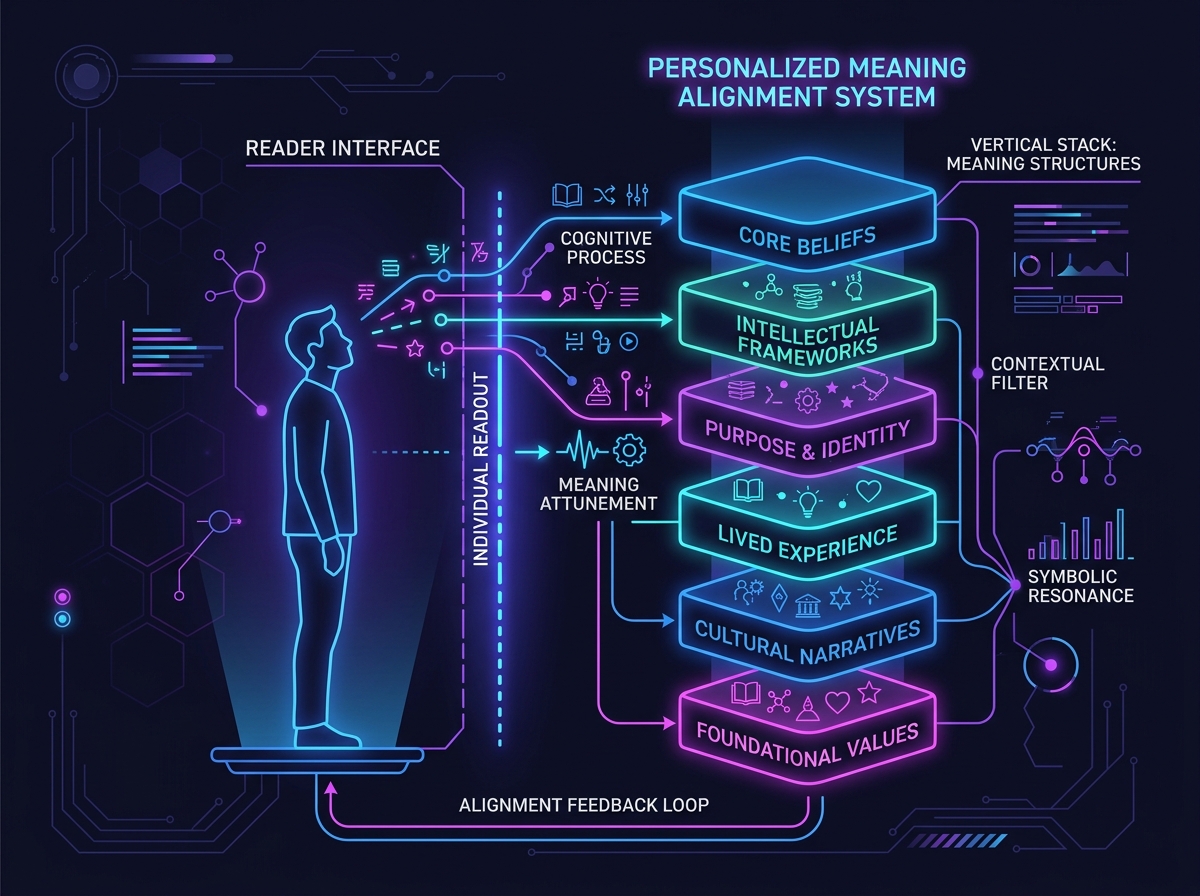
FIGURE 1.1

One Reader, One Pattern

This section introduces the foundational alignment principle of the vertical meta-architecture: that every individual's cognitive mapping is a singular, coherent pattern of meaning. It describes how the architecture scales to support unique personal inquiries while maintaining structural integrity.

Diagram showing a single reader aligned with a vertical stack of personalized meaning structures.

Figure 1.1: Represents how the vertical meta-architecture scales down to support a single individual's cognitive mapping as a unified, coherent pattern without compromising architectural boundaries.

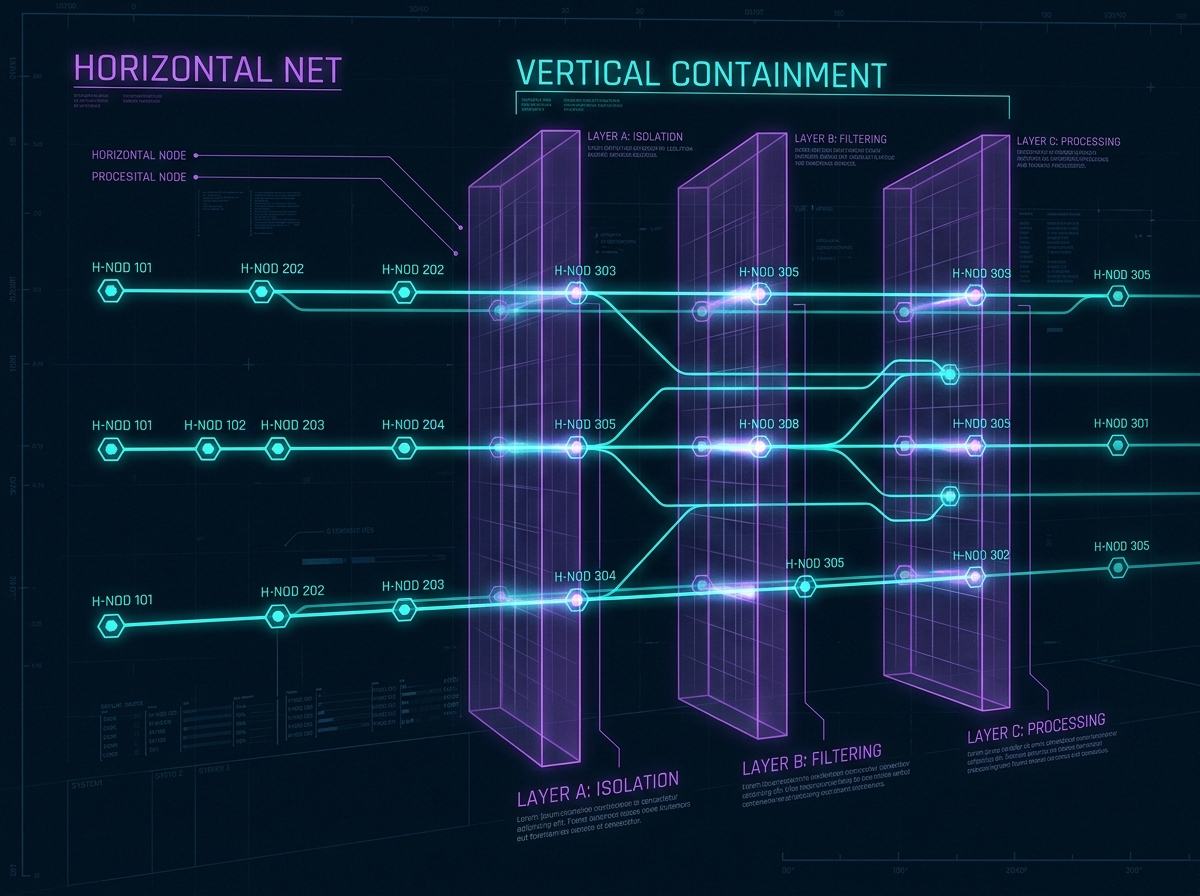
FIGURE 1.2

Field of Relationship

Describes the relational fabric coordinate spaces where different mandala models interact. It details how horizontal net relations connect with vertical containment constraints so that meaning is preserved across different domains.

Network diagram showing horizontal relational links intersected by vertical boundary layers.

Figure 1.2: Maps the relational coordinate spaces where horizontal Net models interface with vertical containment structures.

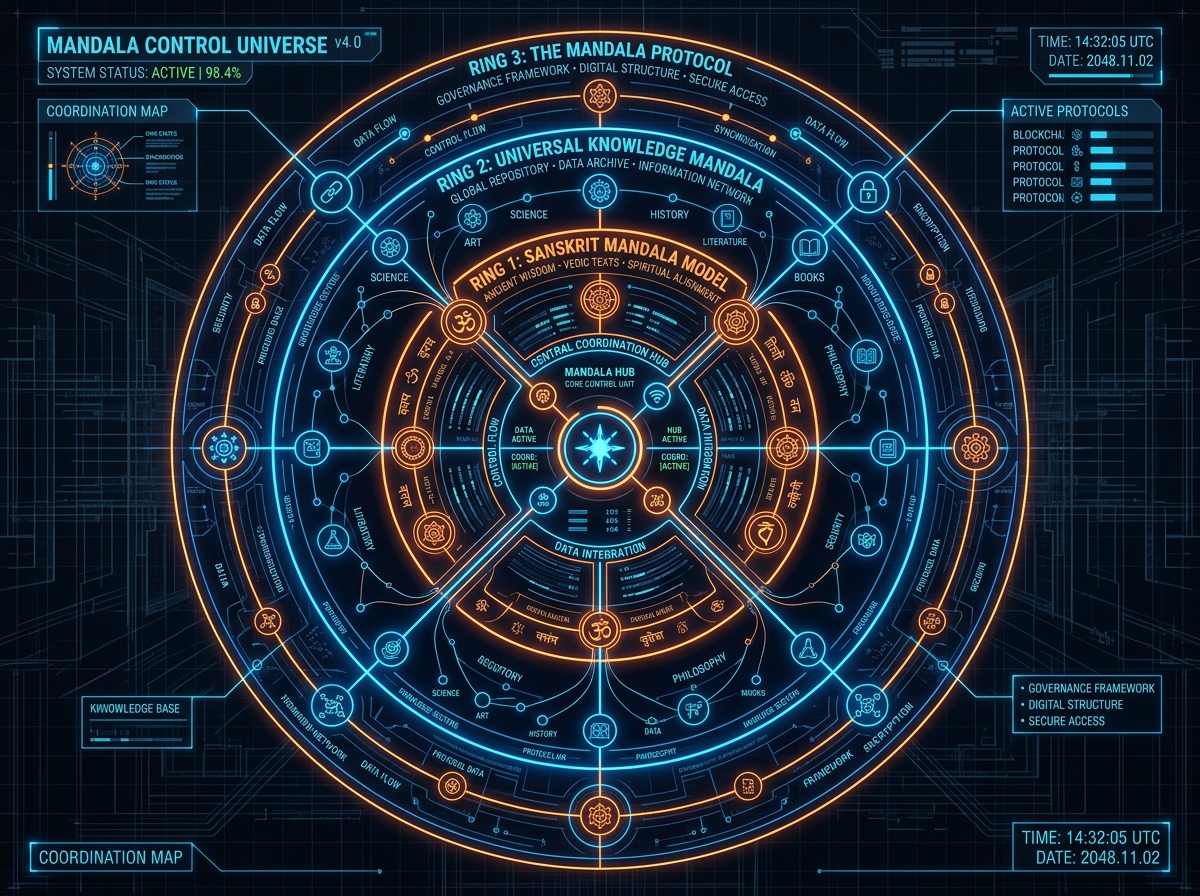
FIGURE 2.1

Master Mandala

Focuses on the central master blueprint that coordinates the sub-frameworks of Sanskrit Mandala Model (SMM), Universal Knowledge Mandala (UKM), and The Mandala Protocol under a unified governance core.

Concentric circle diagram showing SMM, UKM, and The Mandala Protocol aligned under a central master hub.

Figure 2.1: The master blueprint mapping coordination across SMM, UKM, and The Mandala Protocol under a unified governance model.

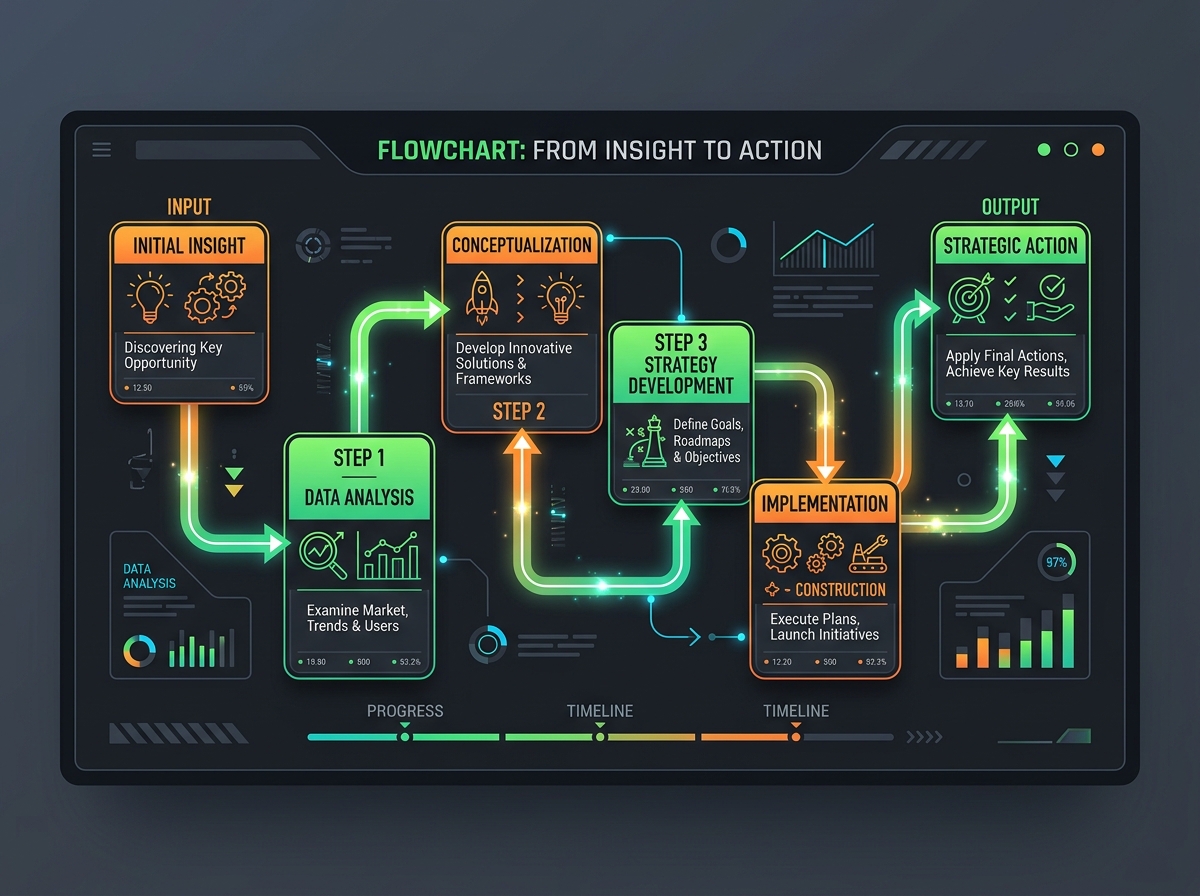
FIGURE 2.2

Five Movements

Details the dynamic paths of transition and processing within the vertical stack. These movements define how insight, reflection, decision, and action flow sequentially through the rings of authority.

Flowchart displaying five distinct steps connecting core insights to practical actions.

Figure 2.2: Tracks the flow of processing: how insights and reflection translate into decision and systematic actions.

FIGURE 3.1

Personalization Boundary

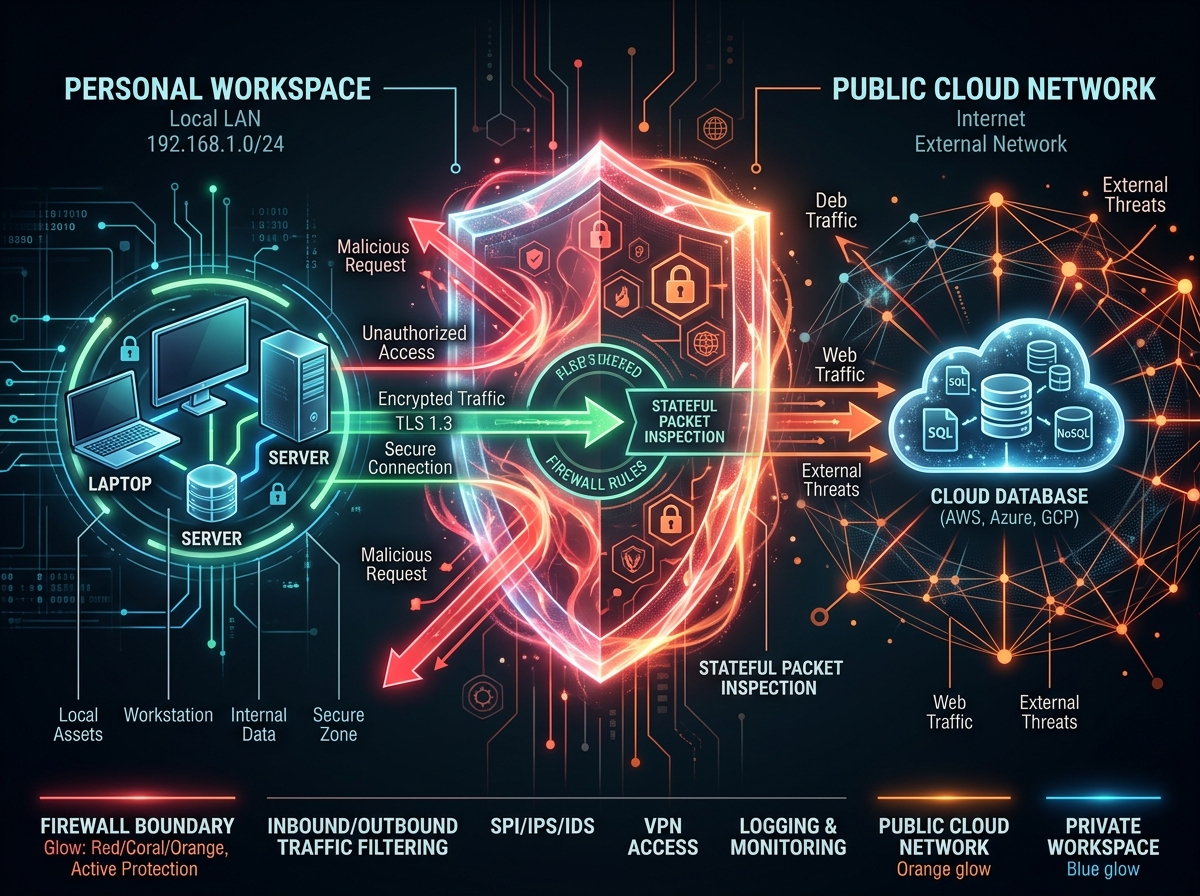
Establishes the strict boundary between the canonical shared models of the ecosystem and the user's private, personalized inquiry spaces, ensuring that personal data is never persisted or leaked.

Security boundary diagram illustrating complete isolation of the user's personal cognitive data.

Figure 3.1: Details the firewalling constraints isolating the user's private reflective workspace from shared ecosystem models.

FIGURE 3.2

Canonical vs Personal Layers

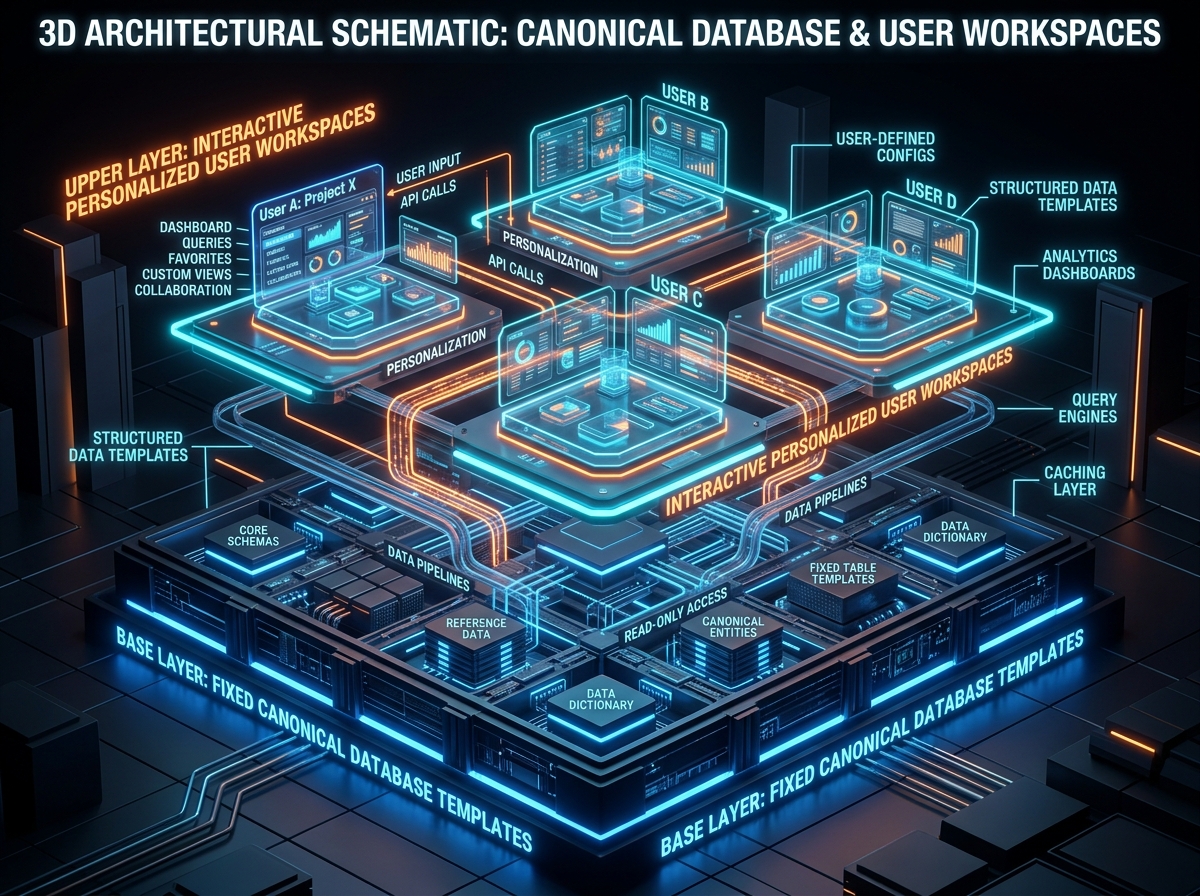
Explains how the vertical containment rules isolate shared, immutable concepts from active personal codas. This ensures structural integrity while giving the user absolute authority over their reflective practice.

Layered schematic dividing fixed canonical templates from dynamic user-managed layers.

Figure 3.2: Demonstrates the separation between immutable ecosystem patterns (canonical) and user-owned interactive spaces.

FIGURE 4.1

From Book to Coda

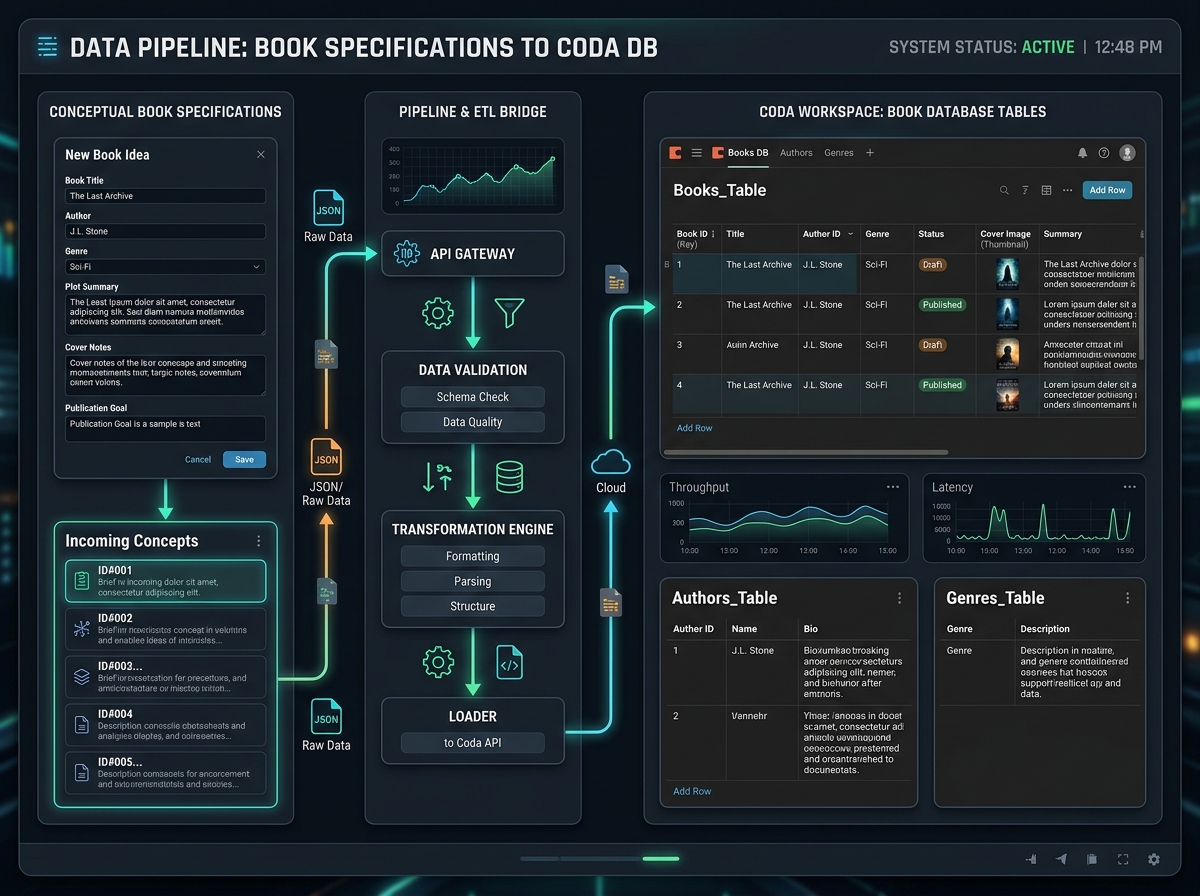
Outlines the bridge connecting the conceptual blueprint of the book to the applied self-inquiry tools, such as the Personal MoM Coda Workspace on MandalaStacks.

Bridge connector diagram showing translation of book concepts into Coda workspace tables.

Figure 4.1: Explains the pipeline translating the conceptual book specification into operational tools in the Personal MoM Coda.

FIGURE 5.1

Where MoM Sits in FoMI

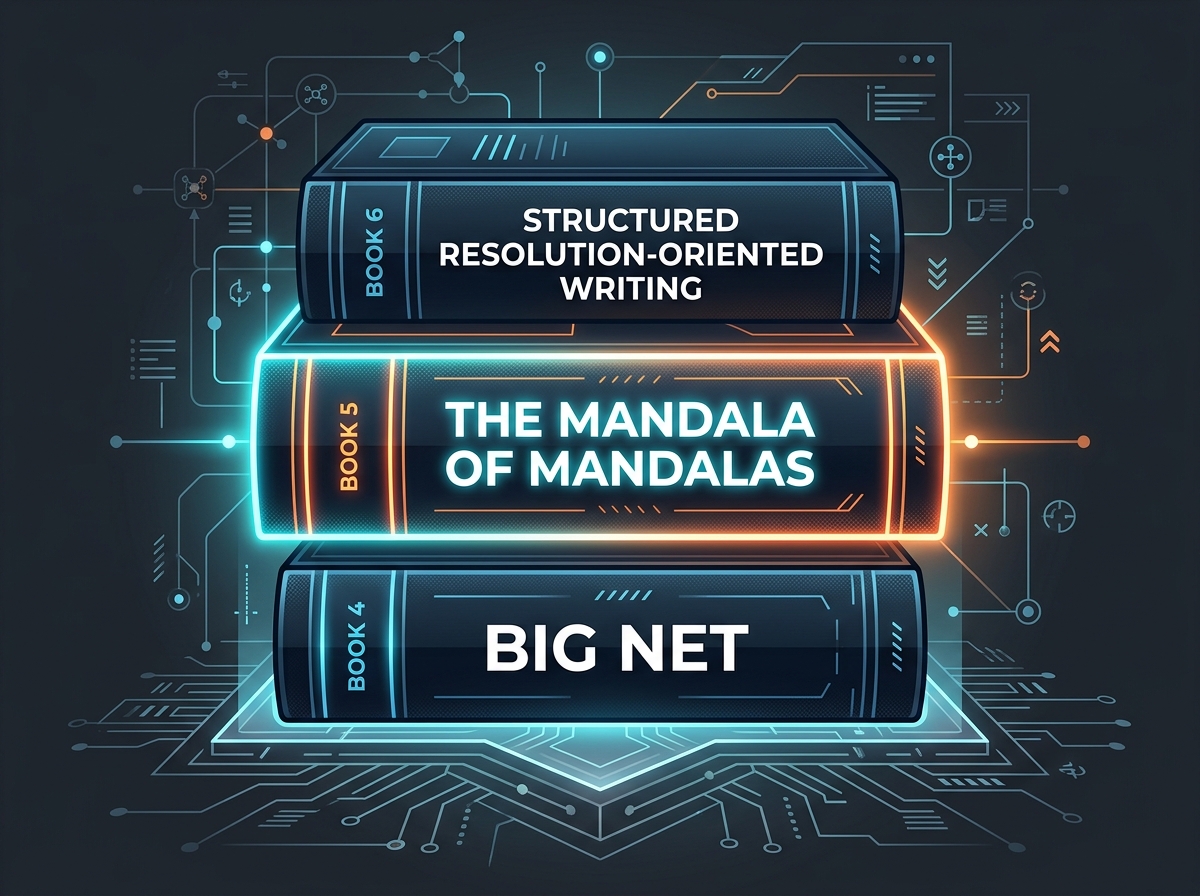
Details the position of Book 5 as the vertical meta-architecture coordinator, sitting between the horizontal net structures of Book 4 (Big Net) and the transmission systems of Book 6 (SROW).

Stacked books diagram showing Book 5 (MoM) situated between Book 4 (Big Net) and Book 6 (SROW).

Figure 5.1: Places Book 5 as the vertical coordinator between Book 4 (Big Net) and Book 6 (SROW).

Reader Resources & Feedback

Review companion tools, practice systematic self-inquiry, or send feedback to help refine these pre-release specifications.