Publication series

Ever-Expanding Conceptions of God

A four-volume inquiry into expanding conceptions of God, ultimacy, relationship, and value.

Status
Active four-volume series
Volumes
2 of 4 volumes released

Series question: How do conceptions of God expand without flattening theological distinctions, spiritual practice, or the claims each conception makes about ultimacy and human relation?

Series thesis: Conceptions of God are not interchangeable labels: they organize different accounts of transcendence and immanence, personhood and consciousness, love and justice, beauty and service, surrender and devotional relationship.

Why this series exists

A problem of structure and direction

Theological language can become either too compressed to orient a reader or too totalizing to preserve real differences among conceptions of God, value, personhood, and practice.

Questions of ultimate concern still shape value architecture, attention, community, and service; readers need a public sequence that makes those questions available without reducing them to a single system.

The series offers a disciplined way to compare and inhabit expanding theological conceptions while keeping contemplation, relationship, practice, and responsibility in view.

Series map

Naming → Relation → Devotional life → Value in action

The progression names causal transitions, not only reading order.

  1. 1. Naming · Conceptions and vocabulary

    Volume 1

    Establishes a public entry into how people name, understand, and approach the divine.

    Therefore: Naming the field raises the question of how conceptions of ultimacy organize relation, difference, and value.

  2. 2. Relation · Systematic and relational conceptions

    Volume 2

    Examines relational models of ultimacy, value fields, and comparative ontologies.

    Therefore: Relational conceptions make devotional relationship and spiritual practice a distinct inquiry rather than an implication left unexplored.

  3. 3. Practice · Practice, surrender, rasa, and devotion

    Volume 3

    Bounded charter: examines how conceptions of God are approached, practiced, and received through surrender, rasa, service, and devotional relationship.

    Therefore: Practice raises the further question of how love, justice, beauty, and service become publicly and personally answerable.

  4. 4. Value · Value architecture and lived consequence

    Volume 4

    Bounded charter: considers how theological conceptions bear on personhood, consciousness, love, justice, beauty, service, and value architecture without prescribing a universal social program.

Series primer

Load-bearing concepts

These definitions orient the reader; the books retain their sustained arguments, evidence, qualifications, and complete cases.

Transcendence and immanence

Two ways of asking how ultimacy exceeds the world and how it may be present within or through it.

Why it matters: The distinction keeps divine otherness and nearness from being casually collapsed.

Developed in: Volumes 1–2

Not the same as: Neither term settles a tradition's full theological account.

Bounded example: A reader can ask whether a conception emphasizes dependence on what exceeds the world, presence within it, or both.

Personhood and consciousness

Questions about whether and how ultimate reality is understood personally, consciously, relationally, or beyond familiar categories.

Why it matters: They shape what relationship, prayer, responsibility, and encounter can mean.

Developed in: Volumes 1–2

Not the same as: They are not shorthand for a single doctrine of mind.

Bounded example: A conception may invite relational address without reducing ultimacy to a human individual.

Value architecture

The ordering of commitments that gives practical force to claims about what is ultimate.

Why it matters: It connects theological conception to love, justice, beauty, service, and lived priorities.

Developed in: Volumes 2–4

Not the same as: It is not a replacement for theology or spiritual discernment.

Bounded example: A reader considers how a claim about ultimacy changes the weight given to care, truthfulness, and service.

Rasa and devotional relationship

Rasa names a felt and relational aesthetic-spiritual register; devotional relationship names disciplined orientation toward the divine.

Why it matters: Together they keep devotion from becoming only abstract belief or private sentiment.

Developed in: Volume 3

Not the same as: They do not erase differences among traditions, practices, or theological claims.

Bounded example: A practice can be examined for its form of attention and service without being generalized into a universal method.

Cumulative argument

Why each volume creates the need for the next

  1. Volume 1 creates a stable public entry point by naming the problem of expanding conceptions without treating them as interchangeable.

  2. Volume 2 follows by asking how systematic and relational accounts of ultimacy organize difference, dependency, and value.

  3. Volume 3 is chartered to consider devotional practice, surrender, rasa, and relationship as their own jurisdiction.

  4. Volume 4 is chartered to bring the inquiry into value architecture and lived consequence through love, justice, beauty, and service.

Book spotlights

Distinct volumes, cumulative architecture

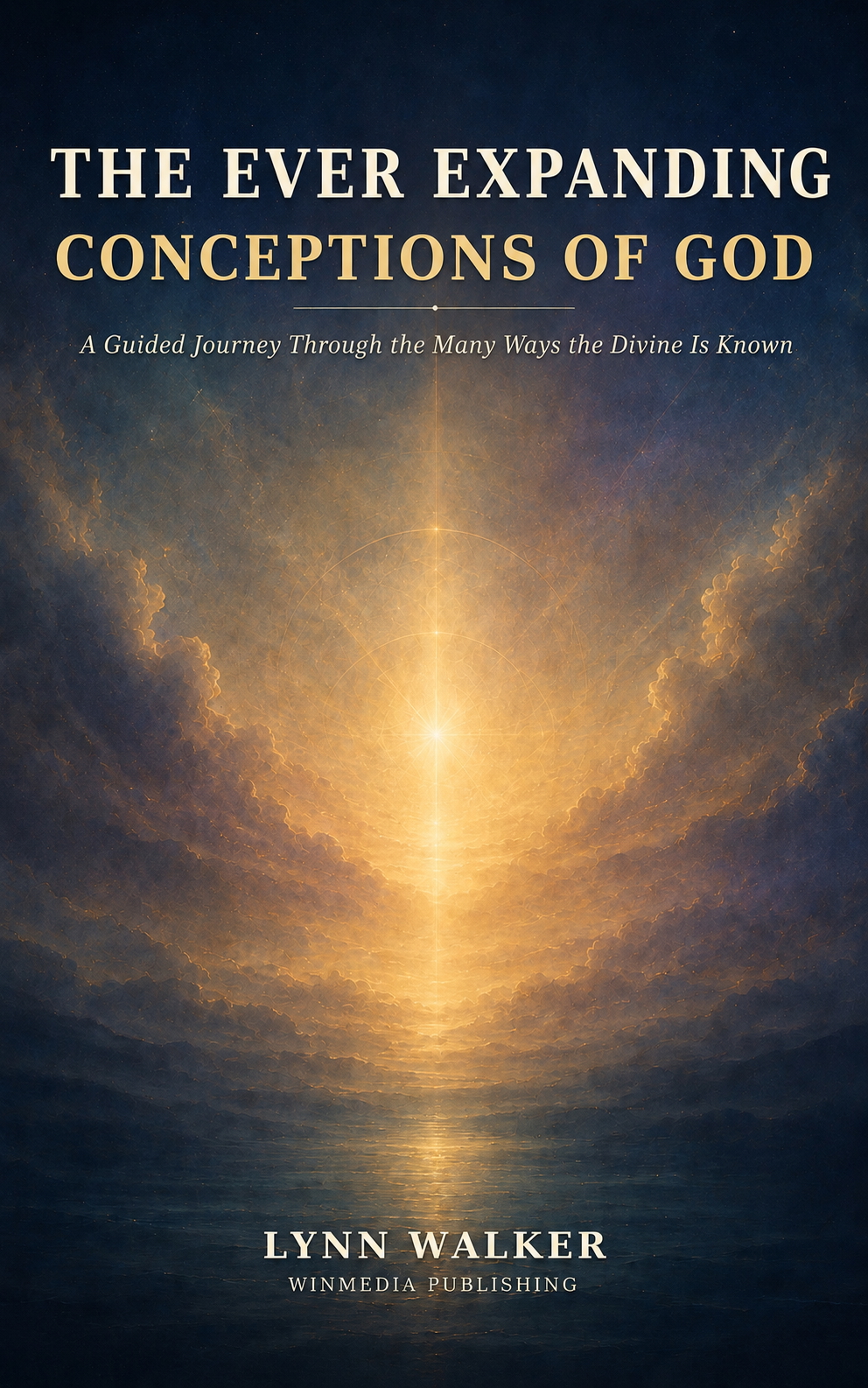
Cover of The Ever-Expanding Conceptions of God — Volume 1

Book 1 of 4 · Published

The Ever-Expanding Conceptions of God — Volume 1

Governing question: How can readers begin to name, understand, and approach the divine without collapsing the field into one answer?

Establishes the opening vocabulary and public entry point for the sequence.

  • Recognize conceptions of God as consequential orientations.
  • Enter the series without requiring prior theological specialization.
  • Distinguish a public orientation from a settled total account.

In the series: Provides the naming and orientation from which the later questions proceed.

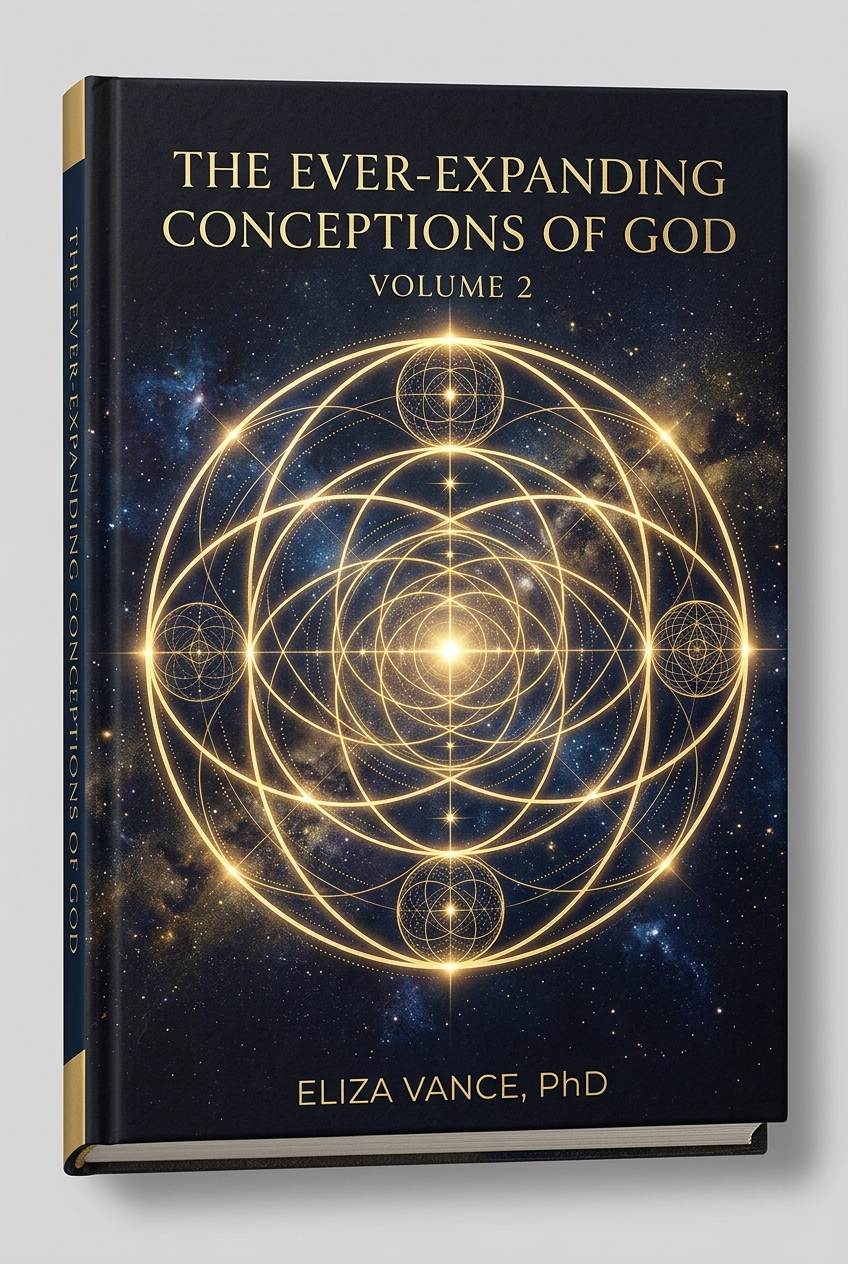
The Ever-Expanding Conceptions of God — Volume 2 Cover

Book 2 of 4 · Published

The Ever-Expanding Conceptions of God — Volume 2

Governing question: How do systematic and relational conceptions of ultimacy structure value, dependence, and human orientation?

Extends the inquiry into relational models of ultimacy, value fields, and comparative ontologies.

  • Compare relational and systematic conceptions with care.
  • Connect ultimacy to value fields without reducing either to a formula.
  • Examine dependence and relation as theological questions.

In the series: Moves the series from opening orientation into comparative and relational structure.

3
Conceptual volume

Book 3 of 4 · In development

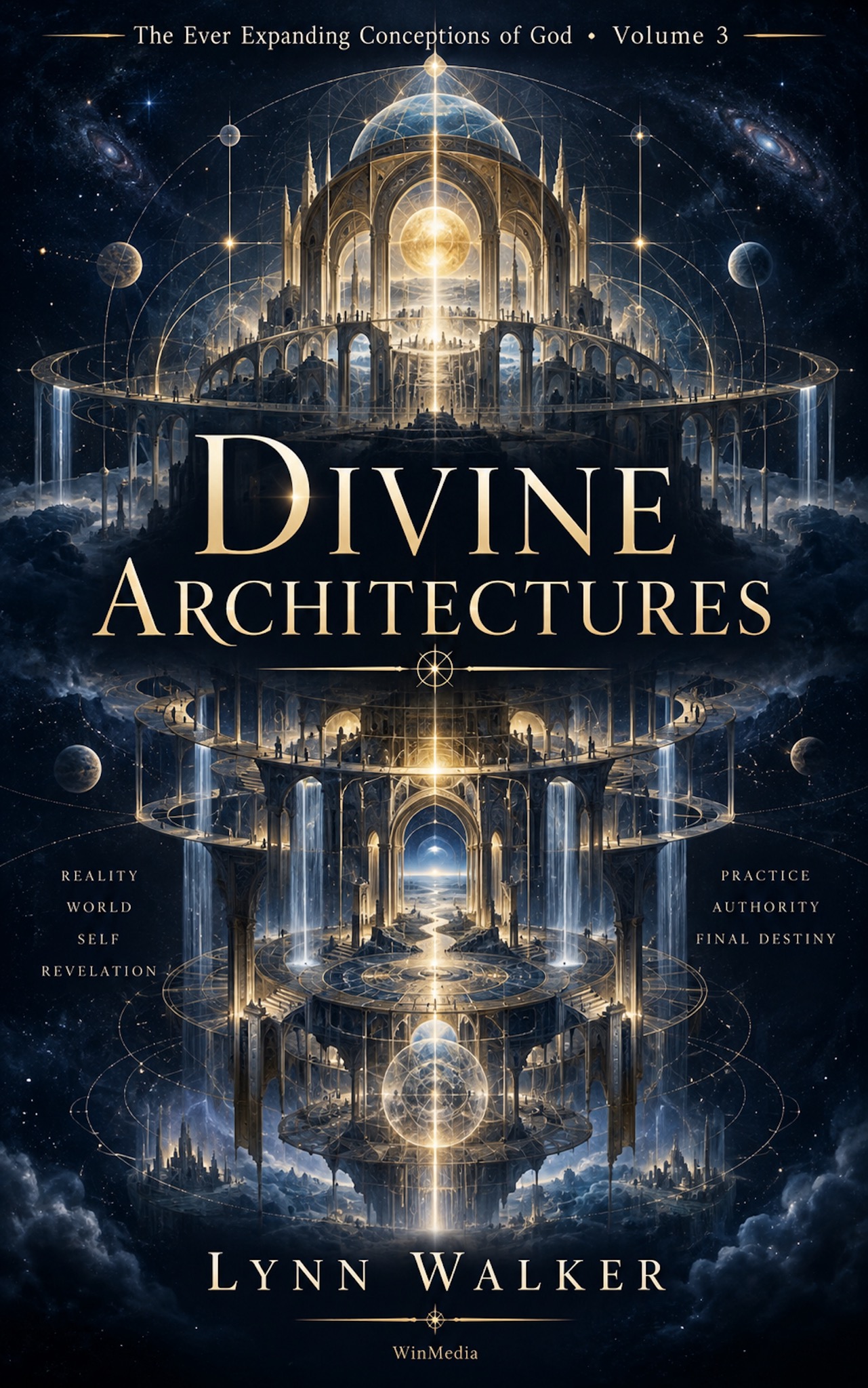
Volume 3 — devotional relationship and practice

Governing question: How do surrender, rasa, service, and spiritual practice form devotional relationship without collapsing theological differences?

Bounded charter: this volume will address practice and devotional relationship as a distinct jurisdiction, not as a summary of prior volumes.

  • Differentiate practice from mere assent.
  • Examine surrender and service with theological care.
  • Keep rasa and devotion contextually situated.

In the series: Turns relational conceptions toward lived devotional encounter and practice.

4
Conceptual volume

Book 4 of 4 · In development

Volume 4 — value architecture and lived consequence

Governing question: How do conceptions of God bear on personhood, consciousness, love, justice, beauty, service, and value architecture?

Bounded charter: this volume will examine lived consequence and value architecture without claiming a universal political program or substituting for particular traditions.

  • Relate ultimate concern to practical value ordering.
  • Hold love, justice, beauty, and service together without treating them as identical.
  • Preserve the distinction between interpretation and prescription.

In the series: Brings the series toward accountable value and action while retaining theological plurality.

Reader pathways

Several valid ways to enter

Beginning the inquiry

For: Readers seeking a public entry into the series.

Begin with: Volume 1

Then: Volume 1 → Volume 2

Start with vocabulary and orientation, then continue into relational and systematic questions.

Full sequence recommended

Relationship and ultimacy

For: Readers focused on relation, dependence, personhood, or consciousness.

Begin with: Volume 2

Then: Volume 2 → Volume 3

Begin with relational conceptions, then follow their implications for practice and devotional relationship.

Full sequence recommended

Practice and value

For: Readers interested in devotional practice, service, love, justice, and beauty.

Begin with: Volume 3

Then: Volume 3 → Volume 4

The planned volumes have distinct jurisdictions; their full argument remains in development.

Full sequence recommended

Whole-series synthesis

What the sequence makes visible

EECG treats conceptions of God as living questions of ultimacy and relation whose differences affect how people understand consciousness, personhood, value, devotion, love, justice, beauty, service, and surrender.

The hub orients readers to the larger territory. The released books retain their sustained arguments, qualifications, and source-specific theological work; later volumes are described only through their bounded charters.

The series does not adjudicate every theological tradition, supply a replacement spiritual authority, or convert its comparative frame into a universal practice program.

EECG is a theological and value-oriented publication series within WinMedia's canonical and interpretive layer. It may be read alongside human orientation and value architecture without being absorbed into HPI, FoMI, or Devotional Intelligence.

Publication access

Reading order and publication records

Publication access follows orientation. Released volumes link to their WinMedia publication records and Amazon where available; in-development volumes are described only by their stable jurisdiction.

  1. 1. The Ever-Expanding Conceptions of God — Volume 1Published · WinMedia publication page
  2. 2. The Ever-Expanding Conceptions of God — Volume 2Published · WinMedia publication page
  3. 3. Volume 3 — devotional relationship and practiceIn development
  4. 4. Volume 4 — value architecture and lived consequenceIn development