
What is UKM#
The Universal Knowledge Mandala, or UKM, is a language-agnostic layered cognitive architecture for organizing, generating, validating, and applying knowledge. It provides a structural model for keeping meaning coherent as a system moves between raw inputs, structured information, validated knowledge, interpretation, judgment, and meta-cognitive control.
On WinMedia, UKM is presented as a canonical framework overview rather than as a substitute for the full UKM book. Its purpose here is to clarify the framework's public-facing structure, language, and role in the larger ecosystem without reproducing the entire specification.
The problem it solves#
UKM is designed to address flat intelligence: the failure condition in which inputs, summaries, interpretations, and decisions are compressed into one undifferentiated space without a stable hierarchy of meaning or an explicit account of how cognition is being organized. Systems built this way often appear capable in the moment while remaining structurally weak over time.
The canonical UKM source identifies the consequences clearly:
- no stable hierarchy of meaning
- no separation of levels of cognition
- no explicit meta-cognition
- no durable structure across contexts
The result is drift, inconsistency, shallow reasoning, and weak transfer across domains. UKM addresses that failure by introducing structured cognition rather than allowing all knowledge operations to collapse into one flat surface.
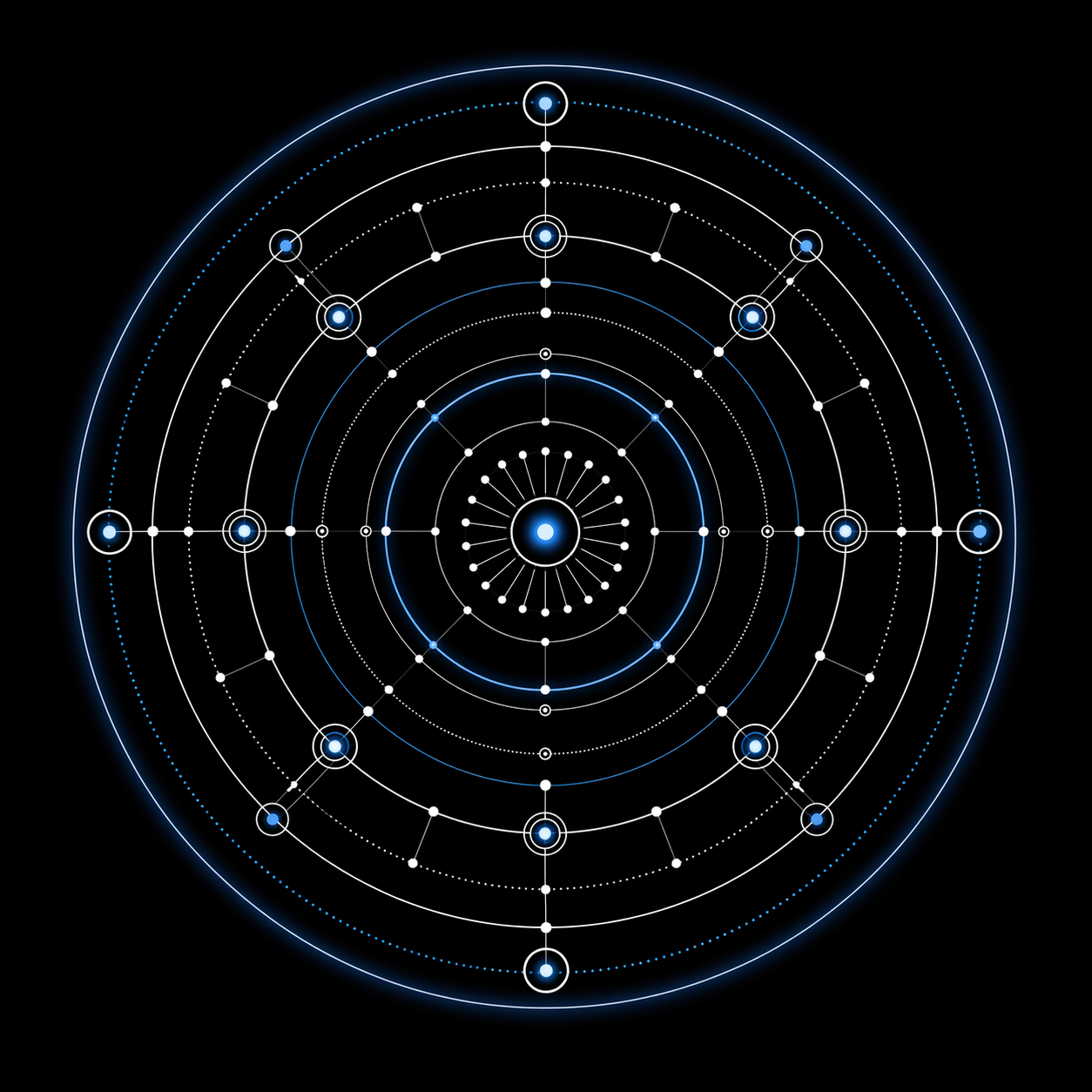
Core structural model#
UKM is organized around one primary cognitive axis and several supporting structural controls. Together, these elements keep knowledge addressable, composable, and governable rather than leaving it as one expanding mass of content.
Layers#
The primary axis of UKM is its layered model:
- Data Layer Raw observations, tokens, and inputs.
- Information Layer Structured data and explicit relationships.
- Knowledge Layer Validated patterns and reusable structures.
- Understanding Layer Contextual interpretation and meaning within systems.
- Wisdom Layer Judgment, prioritization, and applied intelligence.
- Meta Layer Cognition about cognition, system awareness, and orchestration control.
These layers are not interchangeable labels. In the canonical model, they define distinct responsibilities inside a knowledge system and make upward construction, downward constraint, and meta-governance explicit.
Strata#
UKM adds a second axis through strata:
- atomic
- composite
- systemic
- universal
Strata define scope, abstraction level, and composability. They help the framework distinguish not only what kind of cognitive layer is active, but also at what scale the system is operating.
Nodes and edges#
Within this structure, knowledge is represented through nodes and edges rather than only through raw documents or generic records. Nodes can represent concepts, relationships, transformations, or constraints. They are typed, addressable, and composable. Edges express the relations between nodes, including structural, causal, semantic, and operational connections.
This matters because UKM is not only a list of layers. It is a model for how knowledge can be placed, related, and transformed without losing structural accountability.
Orchestration#
UKM also includes an orchestrator. Its role is to route problems across layers, select the appropriate strata, coordinate transformations, and maintain coherence across the system.
This is where UKM moves beyond static classification. The framework does not only describe where knowledge sits. It describes how a system can work with that knowledge while preserving the integrity of the structure.
Relationship to other frameworks#
UKM sits within a larger framework ecosystem, but its role is distinct.
SMM#
SMM is a layered intelligence architecture with a Sanskritic grounding, while UKM is a language-agnostic architecture for structured knowledge and cognition. In canonical terms, SMM can be understood as a specialized instantiation of layered cognition; UKM remains the more general knowledge-architecture frame.
MoM#
MoM is meta-architecture across systems, while UKM is a single cognitive system architecture. In canonical terms, UKM is a mandala within the Mandala of Mandalas.
SROW#
SROW is a communication protocol, while UKM is a cognition architecture. Their relationship matters because SROW expresses structured knowledge in human-readable form without redefining the architecture itself.
MLP#
MLP, or the Mandala Learning Protocol, defines learning progression. UKM defines knowledge structure. Canonically, MLP operates within UKM rather than replacing it.
Why UKM matters#
UKM matters because coherent knowledge systems do not emerge automatically from accumulation. A system may contain many documents, many answers, or many models of explanation and still fail if it cannot preserve relation across layers and strata.
The framework provides a disciplined alternative to that failure. It creates a way to distinguish data, information, knowledge, understanding, wisdom, and meta-cognitive governance rather than collapsing them into one flat space.
That separation is not bureaucratic complexity. It is what makes durable reasoning, consistent transfer, and system-level coherence possible.
Practical implications#
Once UKM is understood, several practical implications follow:
- Builders can identify the layer of a problem rather than treating all tasks as if they belonged to the same cognitive surface.
- Knowledge can be mapped through explicit transformations between layers instead of being summarized or moved without placement.
- Systems can validate coherence more rigorously because nodes, edges, transformations, and constraints are named rather than implied.
- Downstream systems can inherit more stable conceptual structure because the canonical layer has already distinguished knowledge organization from communication, learning progression, and broader system relations.
Where it leads#
UKM leads toward knowledge systems that are more structurally legible, more transferable across domains, and more capable of meta-cognitive governance.
It also leads outward into the rest of the ecosystem. SMM provides the broader architectural frame for layered intelligence. MoM defines how coherent systems relate at a higher level. SROW expresses structured cognition in readable form. MLP governs how learning progresses within that structure.
For WinMedia, that makes UKM a canonical overview of how knowledge should be organized before it is operationalized elsewhere. It clarifies the structure upstream so that later applied systems do not have to invent coherence after the fact.
Related reading#
For the broader layered architecture, see SMM. For system-of-systems architecture, see MoM. For structured writing that preserves readability under complexity, see SROW. For the larger architectural publication context, see The Sanskrit Mandala Model.