
Opening thesis#
Knowledge systems need layers, not merely categories. Categorization sorts material into groups. Layering assigns different responsibilities to different levels of the system so that meaning, relation, interpretation, and support do not collapse into one flat surface.
This difference matters because many systems appear organized while remaining conceptually shallow. They have labels, folders, and menus, but no real account of how knowledge should hold together across levels.
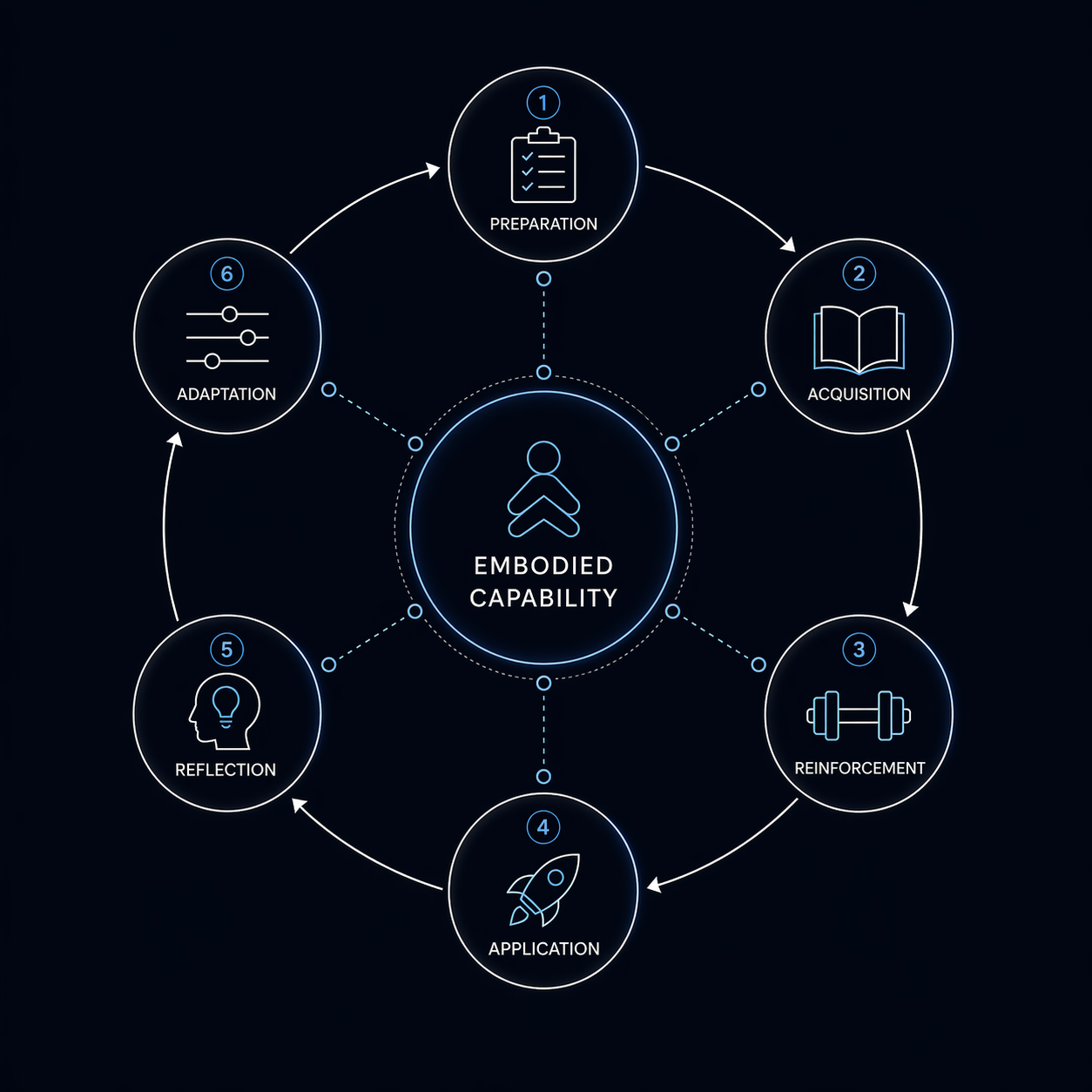
Layering is not classification#
Classification answers the question, "Where does this belong?" Layering answers the question, "What kind of work is happening at this level, and how should it relate to the levels above and below it?"
A category can collect similar items while still leaving the system flat. Layering, by contrast, makes distinctions between kinds of responsibility. It says that framework definition, interpretive elaboration, supporting conditions, and downstream application should not all be treated as equivalent acts.
That is why layering produces more than tidy structure. It produces intelligibility.
Why flat knowledge systems fail#
Flat systems tend to accumulate material without assigning real differences in conceptual role. A framework page, an essay, a summary, and a tool guide may all end up competing in the same representational space. The result is usually one of two failures.
The first is ambiguity of authority. The reader cannot easily tell what defines the concept and what merely interprets or applies it.
The second is drift through compression. Because levels are weakly distinguished, derivative material begins to stand in for canonical material, and the system gradually treats convenience as if it were structure.
This is why layering matters even before scale becomes extreme. Without layers, growth amplifies confusion rather than understanding.
What layers actually do#
SMM makes this clear at the intelligence level by distinguishing responsibilities that should remain visible rather than fusing them into one fluent act.
UKM makes the same point at the knowledge level by insisting that units, summaries, and larger maps must remain structurally related rather than merely collected.
Supporting Structures clarifies that layers do not remain stable by themselves. They need memory, constraints, transitions, and other supports if their distinctions are to survive repeated use.
Taken together, these frameworks suggest that layering is not an ornamental architecture. It is the condition under which a system can remain legible across scale.
Layering changes how systems grow#
When a system is layered, expansion changes character. New material does not simply add volume. It enters a structure where its level of responsibility is clearer.
Canonical explanation can remain canonical. Essays can interpret without replacing. Supporting logic can stabilize without competing for the center.
This is one reason layered systems age better than flat ones. They do not avoid complexity. They distribute complexity into intelligible levels so that the whole can still be understood as it grows.
Why this is not bureaucratic#
Some readers resist layering because it sounds rigid or overdesigned. But flatness is not freedom. Flatness merely hides structure until it reappears in uncontrolled form through drift, ambiguity, and accidental hierarchy.
A layered system can be dynamic. It can revise, expand, and generate new surfaces. What it cannot do is pretend that all levels of meaning are interchangeable without paying a cost in coherence.
Closing orientation#
Once the distinction between layering and categorization is understood, knowledge design becomes more demanding and more fruitful. The question is no longer only how to sort material, but how to preserve real differences in responsibility across the whole structure.
That shift matters because knowledge systems fail less often from lack of content than from lack of form. Layering is one of the ways a system keeps form alive while the content deepens.